Maliki visit to Erbil revives reconciliation hopes
Erbil, Asharq Al-Awsat—Iraqi prime minister Nuri Al-Maliki is set to visit Erbil next Sunday to meet with Kurdistan Regional Government (KRG) leadership, reviving hopes of reconciliation between the Baghdad and Erbil governments. The Iraqi cabinet is set to convene its next session, which will be ch
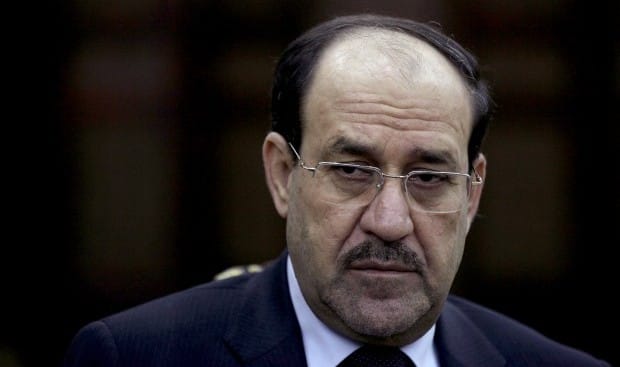
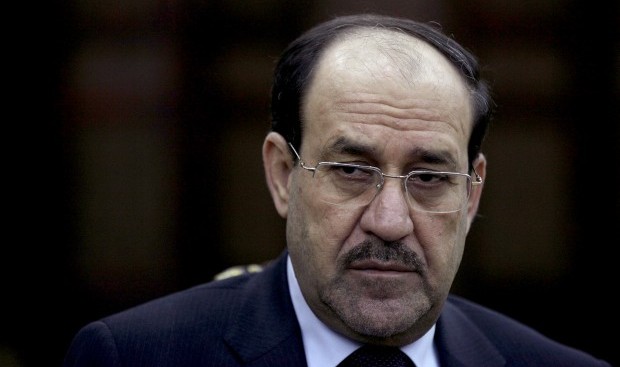
Iraq’s prime minister, Nuri Al-Maliki, listens to a question during an interview with the Associated Press in Baghdad, Iraq, on Wednesday, February 27, 2013. (AP Photo/ Khalid Mohammed)
Erbil, Asharq Al-Awsat—Iraqi prime minister Nuri Al-Maliki is set to visit Erbil next Sunday to meet with Kurdistan Regional Government (KRG) leadership, reviving hopes of reconciliation between the Baghdad and Erbil governments.
The Iraqi cabinet is set to convene its next session, which will be chaired by the Iraqi prime minister, in Erbil on Sunday. This comes after KRG prime minister Nechirvan Barzani extended an invitation to Maliki to visit the Kurdistan region capital during a recent visit to Baghdad. Maliki will reportedly meet with KRG president Masoud Barzani and prime minister Nechirvan Barzani on the sidelines of the cabinet session.
“Maliki and his ministers are expected to arrive in Erbil on Sunday and the joint meeting will be held immediately,” according to trade minister Kheer-Allah Hassan.
A KRG official, speaking to Asharq Al-Awsat on the condition of anonymity, revealed that KRG prime minister Nechirvan Barzani had announced that “the federal government of Iraq has begun to form special committees to implement the agreement signed between the two governments,” adding that he views this as a positive step.
This meeting is expected to solve a number of issues and disputes that have arisen between Erbil and Baghdad following predictions of the failure of the agreement signed between the two sides during Barzani’s visit to the Iraqi capital on April 29. That agreement had sought to put an end to the crisis between the Iraqi federal government and the KRG and included important stipulations regarding the Kurdistan oil & gas law.
Despite signing that earlier agreement, the Baghdad regime failed to fulfill any of its obligations, further escalating the tensions between the Maliki government and the KRG. Sunday’s visit raises hopes that this crisis may soon be resolved, particularly after Maliki has moved towards forming special committees to implement the seven points mentioned in the April 29 agreement.
Speaking to Reuters earlier this week, KRG president Masoud Barzani emphasized that the current round of talks will be the last chance before his government resorts to other options to deal with the federal government.
According to observers, Maliki is also expected to discuss the issue of establishing federal regions, an issue that has recently gained great prominence on the Iraqi political scene.
The establishment of designated Sunni, Shi’ite and Kurdish regions has met with bitter opposition from Iraq’s Sunnis in previous years. However, with the escalating Sunni-dominated anti-government protests sweeping the country, Iraq’s Sunni community has moved closer to calling for an independent federal region of their own—something that Iraq’s Shi’ites are now opposing.
Maliki is expected to discuss this issue with the Kurdish leadership in an attempt to reach a consensus and resolve the second political crisis facing his government.
Kurdistan Democratic Party (KDP) spokesman Ja’afar Ibrahim Eminki confirmed to Asharq Al-Awsat that the establishment of three separate federal regions for Iraq’s three major communities had been one of the objectives of the Kurds following the collapse of Saddam’s regime. He emphasized that the Kurdish leadership has adopted this stance on the premise that the strength of Iraq lies in mutual understanding, co-existence and unity between the country’s Sunni, Shi’ite and Kurdish communities.
Eminki added that the political and sectarian conflicts that continue to play out on the scene in Iraq means that establishing such unity is increasingly difficult, noting that he thinks the establishment of separate federal regions remains the only means of strengthening—rather than weakening—Iraqi unity.