|
• 1955–1972: First Sudanese Civil War takes place between the new Sudanese government and Southern secessionists over the rights of the South to autonomy.
• 1983: Second Sudanese Civil war begins after the South Sudan autonomous state is ended.
• 1985: A military coup suspends the constitution but leaves Shari’a law in place.
• 1986: The government begins peace talks with the Sudanese People’s Liberation Army (SPLA), a Southern force fighting for a secular state.
• June 1989: A military coup overthrows the civilian government.
July 1992: A government offensive seizes Southern Sudan.
• 1993: Muslim judges were moved into the southern states, reinforcing the rule of the Northern, Islamic part of Sudan in the majority Christian South.
• 1999: The Egypt–Libya Initiative begins, aimed at ending the Second Sudanese Civil War.
• January 2005: The Comprehensive Peace Agreement is signed, ending the war.
• January 2011: The results of a referendum are released with 98.83 percent voting for independence.
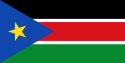
• July 9, 2011: South Sudan becomes officially independent.
• December 2011: Tribal conflicts in Jonglei intensify.
• March 2012: South Sudan seizes the Heglig oil fields.
• March 2013: Sudan and South Sudan both withdraw forces from the Abyei region, although the dispute over oil production continues.
• October 2013: The referendum of the status of the Abyei region is scheduled, asking voters whether they want to remain in Sudan or join South Sudan.
|